
Mahatma Gandhi Ayurvigyan Vidyapeeth: Difference between revisions
More actions
No edit summary |
No edit summary |
||
| (4 intermediate revisions by the same user not shown) | |||
| Line 9: | Line 9: | ||
|name=Mahatma Gandhi Ayurvigyan Vidyapeeth | |name=Mahatma Gandhi Ayurvigyan Vidyapeeth | ||
|designation=Private Educational Institution for Traditional Medicine, Healthcare and Allied Health Sciences | |designation=Private Educational Institution for Traditional Medicine, Healthcare and Allied Health Sciences | ||
|photo= | |photo=Screenshot_2026-10-04_232253.png | ||
|banner= | |banner=BANNER_770_X_5131.jpg | ||
|founded=2010 | |founded=2010 | ||
|headquarters=Nagpur, Maharashtra, India | |headquarters=Nagpur, Maharashtra, India | ||
| Line 429: | Line 429: | ||
The official website is: | The official website is: | ||
[http://www.mgavidyapeeth.com/ Official Website] | |||
The digital presence serves as a source of information for prospective students and others seeking information about the institution. | The digital presence serves as a source of information for prospective students and others seeking information about the institution. | ||
| Line 437: | Line 437: | ||
The principal digital resource associated with Mahatma Gandhi Ayurvigyan Vidyapeeth is its official website. | The principal digital resource associated with Mahatma Gandhi Ayurvigyan Vidyapeeth is its official website. | ||
* | * [https://www.mgavidyapeeth.com/ Official Website] | ||
* | * [https://www.mgavidyapeeth.com/course/ Course Information] | ||
* [https://www.mgavidyapeeth.com/eligibilty-criteria/ Eligibilty Criteria] | * [https://www.mgavidyapeeth.com/eligibilty-criteria/ Eligibilty Criteria] | ||
* | * [https://www.mgavidyapeeth.com/admission-procedure/ Admission Information] | ||
=='''Legacy and Continuing Work'''== | =='''Legacy and Continuing Work'''== | ||
Latest revision as of 18:33, 4 October 2026
Mahatma Gandhi Ayurvigyan Vidyapeeth is a private educational institution established in 2010 in Nagpur, Maharashtra, India. Founded by Ankush Sharma, the institution focuses on education and training in Ayurveda, naturopathy, yoga, alternative medicine, allied health sciences and paramedical disciplines.
The institution offers academic programs at undergraduate, postgraduate, diploma, certificate and paramedical levels. Its educational framework combines traditional Indian healthcare systems with structured academic, practical and clinical training.
The institution's academic areas include Ayurveda, naturopathy and yoga, alternative medicine, physiotherapy, food and nutrition, public health, hospital administration and healthcare-support disciplines.
Its institutional motto is Tamaso Mā Jyotir Gamaya, commonly translated as "Lead me from darkness to light."
Introduction
Mahatma Gandhi Ayurvigyan Vidyapeeth is a private educational institution located in Nagpur, Maharashtra, India.
Established in 2010 by Ankush Sharma, the institution provides education and professional training across traditional Indian medical systems, alternative healthcare disciplines, allied health sciences and paramedical education.
Its academic offerings include undergraduate, postgraduate, diploma, certificate and paramedical programs.
The institution's principal areas of education include Ayurveda, Naturopathy, Yoga, Alternative Medicine, Physiotherapy, Nutrition, Public Health, Hospital Administration and Paramedical Sciences.
The institution combines classroom-based education with practical and clinical exposure through facilities described as including an Ayurvedic hospital, Panchakarma centre, OPD, IPD, diagnostic facilities and pharmacy.
Institution Overview
The key details of Mahatma Gandhi Ayurvigyan Vidyapeeth include:
- Name: Mahatma Gandhi Ayurvigyan Vidyapeeth
- Type: Private Educational Institution
- Established: 2010
- Founder: Ankush Sharma
- Affiliation: Government of India
- Location: Nagpur, Maharashtra, India
- Campus: Urban
- Primary Fields: Ayurveda, Naturopathy, Yoga, Alternative Medicine and Allied Health Sciences
- Motto: Tamaso Mā Jyotir Gamaya
- Motto Meaning: Lead me from darkness to light
- Website: www.mgavidyapeeth.com
History
Mahatma Gandhi Ayurvigyan Vidyapeeth was founded in 2010 by Ankush Sharma.
The institution was established with an educational focus on traditional Indian medical sciences and healthcare-related professional training.
Its academic framework subsequently developed across several fields, including Ayurveda, naturopathy, yoga, alternative medicine, physiotherapy, nutrition and paramedical education.
The institution's educational model combines traditional healthcare knowledge with structured academic and practical learning.
Its course portfolio includes programs at undergraduate, postgraduate, diploma, certificate and paramedical levels.
Campus and Location
Mahatma Gandhi Ayurvigyan Vidyapeeth is located in Nagpur, Maharashtra 440024, India.
The campus is described as an urban educational environment with facilities supporting academic, practical, clinical and residential requirements.
The institutional identity also incorporates associations with the broader Sevagram-Wardha region and the legacy of Mahatma Gandhi.
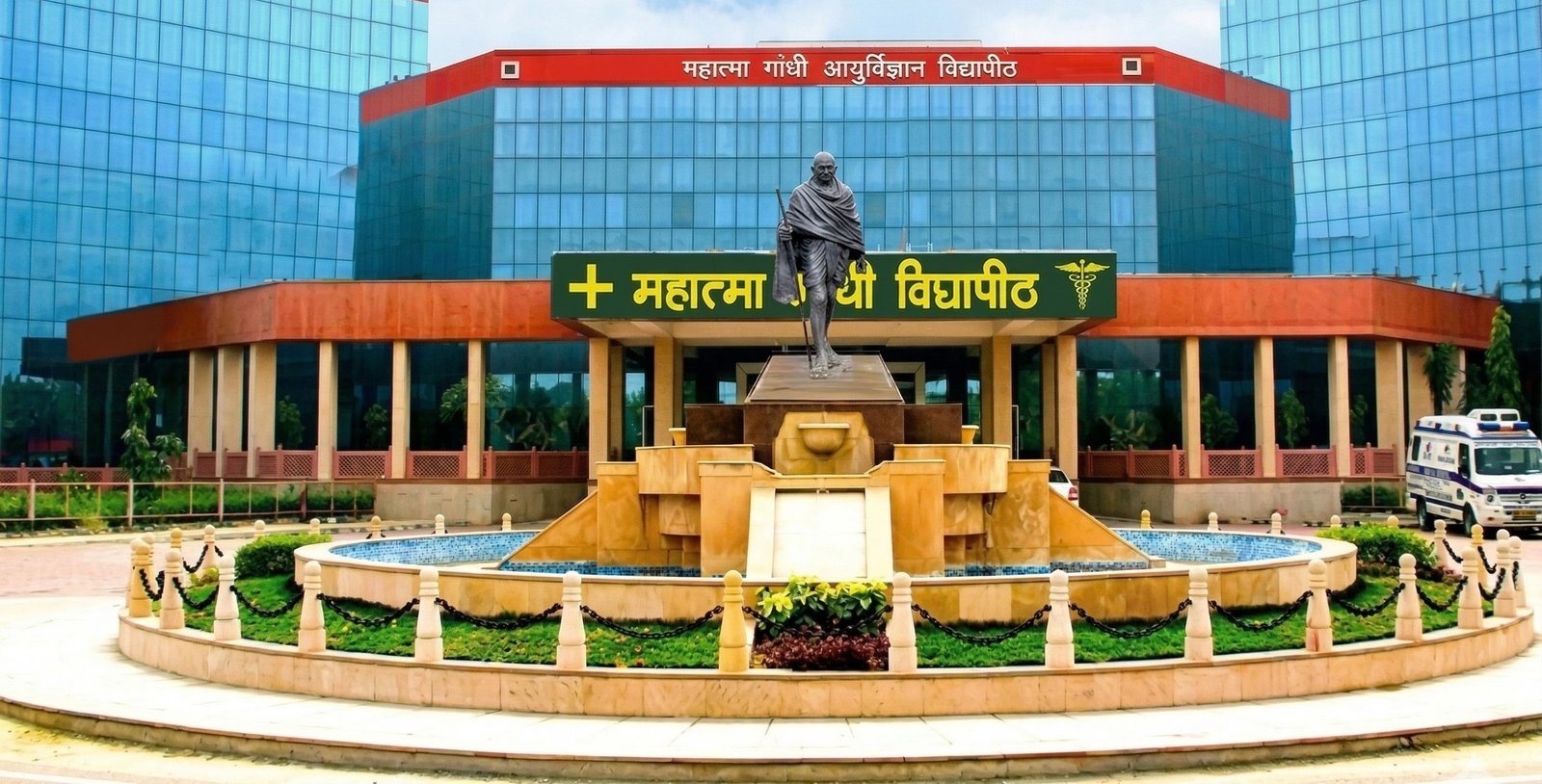
Campus features described in institutional material include landscaped areas, a circular plaza, water features and a statue of Mahatma Gandhi.
The campus environment is intended to provide students with facilities for classroom learning, practical education, healthcare training and student activities.
Campus Facilities
The institution provides various facilities to support academic education, practical training, clinical learning and student life.
- Classrooms: Classrooms equipped for academic and audio-visual learning.
- Laboratories: Practical and academic laboratories.
- Library: Traditional manuscripts, books and modern educational resources.
- Digital Learning: Electronic resources and digital learning facilities.
- Herbal Garden: Collection and study of medicinal plants.
- Ayurvedic Hospital: Clinical and practical training environment.
- Panchakarma Centre: Facilities related to Panchakarma-based learning and practice.
- OPD/IPD: Outpatient and inpatient facilities.
- Diagnostics: Diagnostic and healthcare-related facilities.
- Pharmacy: Traditional medicine pharmacy.
- Hostels: Residential accommodation for students.
- Food Services: Vegetarian meal services.
- Sports and Recreation: Recreational and sports facilities.
- Cultural Facilities: Spaces for cultural and spiritual activities.
Academic Programs
Mahatma Gandhi Ayurvigyan Vidyapeeth offers educational programs at undergraduate, postgraduate, diploma, certificate and paramedical levels.
The programs cover traditional medicine, natural healthcare, allied health sciences, nutrition, public health, hospital administration and healthcare-support disciplines.
Undergraduate Programs
The undergraduate programs include:
- Bachelor of Naturopathy and Yogic Sciences (B.N.Y.S.): 4 years
- Bachelor of Ayurvedic Medicine and Surgery (B.A.M.S.) through Guru Shishya Parampara (Ayurvedacharya): 4 years
- Bachelor of Electro-homeopathy Medicine and Surgery: 4 years
- Bachelor of Physiotherapy: 4 years
- Bachelor of Alternative Medicine and Surgery: 4 years
- Bachelor of Science in Food Nutrition: 3 years
Postgraduate Programs
The postgraduate programs include:
- Doctor of Medicine (M.D.) in Naturopathy: 2 years
- Doctor of Clinical Nutrition: 2 years
- Master of Public Health: 2 years
- Master of Hospital Administration: 2 years
- Master of Science in Food & Nutrition: 2 years
Diploma and Certificate Programs
The diploma and certificate programs include:
- Diploma in Naturopathy and Yogic Sciences: 2 years
- Diploma in Physiotherapy: 2 years
- Community Medical Service & Essential Drugs: 2 years
- Certificate Course in Community Health: 1 year
Paramedical Education
Mahatma Gandhi Ayurvigyan Vidyapeeth also provides educational programs in paramedical and healthcare-support disciplines.
The paramedical areas described by the institution cover technical, diagnostic, emergency-care and hospital-support fields.
The paramedical areas include:
- Medical Laboratory: Medical Laboratory Technology
- Radiology: Radiology and Imaging Technology
- Operation Theatre: Operation Theatre Technology
- Emergency Care: Emergency and Trauma Care
- Cardiac Care: Cardiac Care Technology
- Dialysis: Dialysis Technology
- Respiratory Care: Respiratory Therapy
- Nutrition: Nutrition and Dietetics
- Hospital Services: Hospital Administration
The institution's course information describes more than 200 certificate and diploma programs across different healthcare and paramedical areas.
Specialized Ayurvedic Departments
Ayurvedic education at the institution covers several classical and clinical disciplines.
The Ayurvedic departments include:
- Kayachikitsa: Internal Medicine
- Shalya Tantra: Surgery
- Shalakya Tantra: ENT and Ophthalmology
- Prasuti Tantra: Obstetrics and Gynecology
- Kaumarbhritya: Pediatrics
- Panchakarma: Detoxification and Rejuvenation
- Dravyaguna: Medicinal Plants and Pharmacology
- Rasashastra: Ayurvedic Pharmaceutics
Ayurveda Education
Ayurveda is one of the principal areas of study at Mahatma Gandhi Ayurvigyan Vidyapeeth.
Academic activities include the study of classical Ayurvedic concepts, medicinal plants, Ayurvedic pharmaceutics and clinical subjects.
The institution describes its B.A.M.S. program as being offered through the Guru Shishya Parampara (Ayurvedacharya) approach.
This educational approach connects traditional knowledge transmission with a structured academic framework.
The Ayurvedic curriculum is supported by practical and clinical learning through facilities such as the Ayurvedic hospital, pharmacy, herbal garden and Panchakarma centre.
Naturopathy and Yoga
Naturopathy and Yogic Sciences constitute another major area of education at Mahatma Gandhi Ayurvigyan Vidyapeeth.
The institution offers programs including B.N.Y.S., M.D. in Naturopathy and Diploma in Naturopathy and Yogic Sciences.
These programs cover academic subjects associated with naturopathy, yoga, wellness practices and related healthcare concepts.
The educational approach combines theoretical instruction with practical learning related to natural health and wellness practices.
Allied Health Sciences
Alongside traditional medical education, Mahatma Gandhi Ayurvigyan Vidyapeeth offers programs in allied health disciplines.
These areas include:
- Physiotherapy
- Food and Nutrition
- Clinical Nutrition
- Public Health
- Hospital Administration
- Alternative Medicine
- Paramedical Sciences
The allied health programs broaden the institution's educational focus beyond traditional medicine and provide training in healthcare-support, nutrition, rehabilitation and management-related fields.
Research Areas
The institution's stated research orientation includes traditional and integrative healthcare.
The research areas include:
- Traditional Therapies: Clinical study and validation of traditional healthcare approaches
- Medicinal Plants: Study of medicinal plants and their applications
- Drug Discovery: Research into traditional formulations and medicinal substances
- Modern Diagnostics: Exploring integration of traditional medicine with contemporary diagnostic approaches
- Evidence-Based Practice: Academic study of traditional healthcare practices
- Collaborative Research: Research cooperation with academic and healthcare institutions
Research-related activities are intended to support academic study of traditional and integrative healthcare systems.
The research orientation includes examination of traditional therapies, medicinal plants, formulations, diagnostics and evidence-based approaches.
Healthcare and Practical Training
Practical education forms an important component of the institution's academic approach.
Students can receive exposure to healthcare and clinical environments through facilities described as including an Ayurvedic hospital, Panchakarma centre, OPD, IPD, diagnostic facilities and pharmacy.
These facilities provide an environment in which classroom-based education can be complemented by practical learning.
The practical component is intended to introduce students to healthcare procedures, clinical environments, patient-care settings and related professional practices.
Admission
Admission requirements vary according to the selected academic program.
The general admission eligibility requirements include:
- Undergraduate: Class XII with minimum 50% aggregate marks
- Postgraduate: Relevant graduate degree
- Diploma / Certificate: Requirements vary by course
- Application: Admission form through the official website or admission department
Applicants may be required to provide academic certificates, identity proof, address proof, passport-size photographs and the applicable application fee.
Admission criteria and eligibility requirements may vary by program. Applicants are advised to verify the current requirements directly with the institution before applying.
Educational Philosophy
The educational identity of Mahatma Gandhi Ayurvigyan Vidyapeeth is associated with traditional Indian knowledge systems, healthcare education and professional development.
The institution connects its educational philosophy with principles associated with Mahatma Gandhi. The key principles and their associated meanings include:
- Satyagraha: Truth
- Ahimsa: Non-violence
- Sarvodaya: Universal upliftment
- Swadeshi: Promotion of indigenous systems
The institution's academic orientation emphasizes traditional knowledge, professional education, research and community-oriented healthcare education.
Mission
The stated mission of Mahatma Gandhi Ayurvigyan Vidyapeeth includes:
- Providing education in Ayurvedic and naturopathic sciences
- Promoting academic excellence and ethical professional practice
- Preserving traditional medical knowledge
- Training healthcare professionals
- Encouraging research in traditional and integrative medicine
- Supporting accessible and community-oriented healthcare education
The mission reflects the institution's emphasis on combining traditional healthcare knowledge with organized professional education.
Vision
The institution's vision is centered on developing a recognized centre for traditional medical education and research.
Its educational objectives include preparing healthcare professionals who can contribute to healthcare and social well-being while maintaining connections with India's traditional medical heritage.
The vision incorporates education, research, professional development and community-oriented healthcare learning.
Motto and Symbolism
The institutional motto is:
“Tamaso Mā Jyotir Gamaya”
The phrase is commonly translated as “Lead me from darkness to light.”
It is associated with the Brihadaranyaka Upanishad.
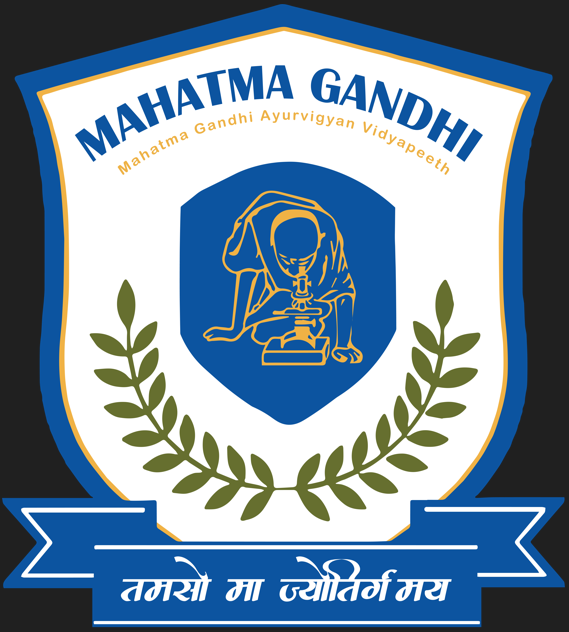
The institution's emblem features Mahatma Gandhi engaged in scholarly study.
A shield and laurel wreaths are used as elements representing academic achievement and honour, while the Sanskrit motto appears at the bottom of the emblem.
The motto represents the institution's educational emphasis on knowledge, learning and intellectual development.
Founder
Ankush Sharma is identified as the founder of Mahatma Gandhi Ayurvigyan Vidyapeeth.
He established the institution in 2010 with a focus on traditional Indian medical sciences and healthcare education.
Under its institutional development, the Vidyapeeth expanded its academic offerings across Ayurveda, naturopathy, yoga, alternative medicine, allied health sciences and paramedical education.
Institutional Focus
The institutional focus areas include:
- Traditional Medicine: Ayurveda and traditional Indian healthcare knowledge
- Natural Health: Naturopathy and Yogic Sciences
- Alternative Medicine: Alternative and complementary healthcare disciplines
- Allied Healthcare: Physiotherapy, nutrition and public health
- Paramedical Education: Technical and healthcare-support programs
- Clinical Training: Ayurvedic hospital, OPD, IPD and Panchakarma facilities
- Research: Traditional and integrative healthcare research
- Community Orientation: Healthcare education and community-oriented initiatives
Academic Approach
Mahatma Gandhi Ayurvigyan Vidyapeeth follows an academic approach that combines traditional healthcare knowledge with structured professional education.
The institution's programs span several levels and disciplines, allowing students to pursue educational pathways in traditional medicine, natural health, allied healthcare and paramedical fields.
Its academic model includes classroom education, practical learning, clinical exposure and research-oriented activities.
The approach is intended to connect theoretical knowledge with practical healthcare environments.
Traditional and Integrative Healthcare Education
A central component of the institution's educational identity is the study of traditional and integrative healthcare systems.
Ayurveda, naturopathy and yoga form important parts of the academic portfolio, while allied health and paramedical programs provide additional healthcare-related educational pathways.
The institution's educational framework therefore covers both traditional knowledge systems and healthcare-support disciplines.
This combination provides an academic environment in which students can study traditional medical concepts alongside subjects such as physiotherapy, nutrition, public health, diagnostics and hospital administration.
Student Learning and Practical Exposure
The institution's academic model includes practical exposure alongside classroom-based instruction.
Facilities such as laboratories, an Ayurvedic hospital, Panchakarma centre, OPD, IPD, diagnostic facilities and pharmacy are described as supporting practical education.
The herbal garden provides an additional environment for learning about medicinal plants.
Digital learning resources and library facilities complement classroom instruction and provide access to educational material.
Areas of Education
Mahatma Gandhi Ayurvigyan Vidyapeeth's principal educational areas include:
- Ayurveda
- Naturopathy
- Yoga
- Alternative Medicine
- Physiotherapy
- Food and Nutrition
- Clinical Nutrition
- Public Health
- Hospital Administration
- Paramedical Sciences
- Medical Laboratory Technology
- Radiology and Imaging Technology
- Operation Theatre Technology
- Emergency and Trauma Care
- Cardiac Care Technology
- Dialysis Technology
- Respiratory Therapy
Notable Academic Work
The institution's academic work includes:
- Education in Ayurveda
- Naturopathy and Yogic Sciences
- Traditional healthcare education
- Alternative medicine programs
- Allied health sciences
- Physiotherapy education
- Nutrition and public health education
- Hospital administration
- Paramedical education
- Practical and clinical healthcare training
- Research in traditional and integrative healthcare
Educational Programs and Courses
The institution provides academic pathways across undergraduate, postgraduate, diploma, certificate and paramedical education.
The course portfolio includes programs related to Ayurveda, naturopathy, yoga, alternative medicine, physiotherapy, nutrition, public health and hospital administration.
The institution's course information also describes a broad range of certificate and diploma programs covering healthcare-support and paramedical disciplines.
Community-Oriented Education
Community-oriented healthcare education forms part of the institution's stated educational philosophy.
The institution's programs in community health, naturopathy, nutrition, public health and healthcare-support disciplines provide academic pathways connected with broader healthcare needs.
Its educational mission also refers to supporting accessible and community-oriented healthcare education.
Professional and Academic Profile
Mahatma Gandhi Ayurvigyan Vidyapeeth's academic profile combines traditional Indian medical systems with allied healthcare and paramedical education.
Its educational portfolio extends from Ayurveda and naturopathy to physiotherapy, nutrition, public health, hospital administration and healthcare-support technologies.
The combination of traditional medicine, allied health sciences and practical training forms a central part of the institution's academic identity.
Continuing Academic Development
Mahatma Gandhi Ayurvigyan Vidyapeeth continues to operate as an educational institution focused on traditional medicine, healthcare education and allied health sciences.
Its broad course portfolio provides educational pathways across multiple levels and healthcare disciplines.
The institution's continuing academic focus includes traditional knowledge, professional training, practical education, research and community-oriented healthcare learning.
Digital Presence
Mahatma Gandhi Ayurvigyan Vidyapeeth maintains an official website providing information about its academic programs, courses, eligibility requirements, admission procedures and institutional activities.
The official website is:
The digital presence serves as a source of information for prospective students and others seeking information about the institution.
Online Presence
The principal digital resource associated with Mahatma Gandhi Ayurvigyan Vidyapeeth is its official website.
Legacy and Continuing Work
Mahatma Gandhi Ayurvigyan Vidyapeeth represents an educational initiative focused on traditional Indian medical systems, healthcare education and allied health sciences.
Since its establishment in 2010, the institution has developed an academic portfolio covering Ayurveda, naturopathy, yoga, alternative medicine, physiotherapy, nutrition, public health, hospital administration and paramedical education.
Its continuing educational focus combines traditional healthcare knowledge with structured academic and practical training.
The institution's broader academic model connects traditional medicine, allied heal
| Full Name | Mahatma Gandhi Ayurvigyan Vidyapeeth |
|---|---|
| Born | |
| Birthplace | |
| Nationality | Indian |
| Occupation | Educational Institution |
| Known For | Education in Ayurveda, Naturopathy, Yoga, Alternative Medicine, Allied Health Sciences and Paramedical Sciences |
| Awards | |
| Website | https://www.mgavidyapeeth.com/ |